
Most visitors to the Marais stick to the main streets and famous landmarks—but some of the neighborhood’s most interesting places are hidden in plain sight.
I love spending time here. Whether I’m wandering medieval streets, visiting museums, or simply exploring side alleys and hidden courtyards, there’s always something new to discover. In fact, many of my favorite places in the Marais are the ones most visitors walk right past.
What makes the Marais so fascinating is how it has constantly reinvented itself. Once a swamp, it became a fashionable district for French nobility before evolving into a center for craftsmen and merchants.
Over the centuries, different communities have left their mark on the neighborhood.

The Jewish quarter around Rue des Rosiers has existed since the Middle Ages, Chinese immigrants settled in the northern part of the district during the early 20th century, and by the 1980s, the Marais had become the heart of Paris’s LGBT+ community.
That mix of cultures, histories, and influences is what gives the neighborhood its unique character today. Around almost every corner, you’ll find a story waiting to be discovered.
To help you make the most of your visit, I’ve put together 17 of my favorite things to do in the Marais. From historic landmarks and hidden passageways to peaceful gardens, vintage shops, and some of the city’s best cocktail bars, these are the places that make the Marais one of the most rewarding neighborhoods to explore in Paris.
New to Paris or the Marais? Start here
If you’re visiting Paris for the first time, I’d genuinely recommend doing this walking tour before anything else in this guide.
I’ll admit, I almost skipped it.
After living in Paris for nearly 20 years, I honestly thought, How much could I possibly learn? I’ve explored Le Marais countless times over the years, so I expected a pleasant stroll, but I certainly wasn’t expecting to see one of my favorite neighborhoods in a completely new way.
I couldn’t have been more wrong.
What surprised me wasn’t that I learned obscure historical facts—it was how our guide connected everything together. Suddenly, buildings and streets I’d walked past dozens of times had stories, and Le Marais made so much more sense. It completely changed the way I experience the neighborhood today.
That’s exactly why I think it’s such a great introduction for first-time visitors.
Paris can feel a little overwhelming at first, and it’s easy to admire beautiful buildings without really understanding what you’re looking at. This tour gives you the background and confidence to explore the city on your own, so you’ll get much more out of the rest of your trip.
What I loved most was the atmosphere. It never felt like a formal tour where you’re trying to keep up with someone reciting dates.

Instead, it felt like spending a morning with a knowledgeable local friend who genuinely loves Paris and enjoys sharing the city’s stories. The three small tastings along the way were a lovely bonus and made it feel like a perfect introduction to Parisian life.
It’s one of the very few tours I’ve taken in Paris that I’d happily recommend to friends and family.
If you’re visiting Paris for the first time, I genuinely think this is one of the best ways to start your trip. You can find all the details here.
17 Essential Things to do in Le Marais
The Marais is a fascinating blend of history and cultures and every corner tells a story, making it a must-visit for anyone exploring the city. So let’s dive into the must-visit spots in the Marais.
I’ve also attached a map as a neighbourhood guide for you to get a better overview, helping you navigate the best route to experience it all.
#1 Hôtel-de-Ville (Paris City Hall)
Adress: Place de l’Hôtel de Ville, 75004 Paris

The Hôtel de Ville is the City Hall of Paris and the site has hosted Paris’s government since the 14th century. However, the building as it is today is actually already the third version.
The first structure was torn down by Francis I, who found it unworthy of the city. French kings of the 16th and 17th centuries rebuilt it then into a stunning Renaissance-style palace. But it didn’t last: During the Paris Commune it was burnt to the grounds in 1871.
What you see today was rebuilt over 19 years. The outside is a near-perfect replica of the original Renaissance design, but the interior? Completely modern and designed in the 19th century.
Unless you’re visiting during European Heritage Days, you won’t be able to go inside. But the square itself is worth a stop. It regularly hosts exhibitions, seasonal events, and public celebrations. More recently, it has also become home to one of Paris’s first urban forests.
I still remember how grey and empty this square used to feel. Replacing much of the concrete forecourt with trees and greenery has completely changed the atmosphere and made it a far more pleasant place to spend a few minutes.

#2 Memorial de la Shoah
Adress: 17 Rue Geoffroy l’Asnier, 75004 Paris
The Memorial de la Shoah Museum is dedicated to preserving the memory of Jewish life and persecution during World War II. Its exhibits are divided into five sections.
In the outdoor area, you’ll find the Wall of Names, engraved with the names of approximately 76,000 French Jews who were murdered during the Holocaust. Inside, the crypt contains the ashes of victims who perished in concentration camps, serving as a solemn place of reflection.
The Hall of Index Cards highlights the bureaucratic machinery of the Vichy regime, showing how Jews were identified and deported.
Additional exhibits include an extensive collection of documents, photographs, and videos that illustrate Jewish life in France during the Holocaust. The final section honors the individuals who risked everything to rescue and protect Jews.
The Memorial de la Shoah is an essential museum to visit in Paris. Admission is free, making it accessible to everyone who wishes to learn and remember.
Tip: Just across the street, you can admire some of the oldest half-timbered houses in Paris—a glimpse of the city’s medieval past.
#3 Saint-Paul Saint-Louis Church
Adress: 99 Rue Saint-Antoine, 75004 Paris

The Jesuit church of Saint-Paul-Saint-Louis is one of the Marais’s most striking landmarks—you can’t miss its grand size. Built nearly 400 years ago, it was the first church in Paris to feature Baroque architecture and has welcomed many famous figures over the centuries.
Inside, you’ll find a baptismal font donated by Victor Hugo and, when it’s not on loan, a painting by Eugène Delacroix. The church also boasts beautiful stained-glass windows and intricate statues that make it well worth stepping inside.
I especially like stopping here on busy weekends when the streets of the Marais are packed with visitors.
The moment you step through the doors, the noise seems to disappear. Whenever I need a short break from the crowds, this is one of my favorite places in the neighborhood to slow down and recharge.
If you also find Paris overwhelming during peak season, I’ve put together a guide on how to enjoy the city while avoiding the worst of the crowds: Paris Without The Overwhelm
Tip: After visiting, wander over to the Village Saint-Paul next to the church. On Rue Charlemagne, just across the street, you’ll spot the oldest remaining section of the Parisian city wall—a hidden gem in the Marais.
#4 Hôtel de Sens
Adress: 7 Rue des Nonnains d’Hyères, 75004 Paris

The Hôtel de Sens is one of the Marais’s most impressive city palaces, with a history as grand as its architecture. Originally built for the Archbishop of Sens, it later became home to King Charles of France.
After the French Revolution, the palace passed into private hands and was used as a workshop. Eventually, it was purchased by the city, declared a historic monument, and now houses the Forney Art Library.
The building itself looks like a fairytale castle, with its turrets and Gothic details. Don’t miss the small garden—it’s a peaceful public park, perfect for a quiet break in the heart of the city.
For years, I only admired the building from the street and never thought to step inside the gates. When I finally did, I discovered one of the quietest little gardens in the Marais. It’s the kind of place that feels completely disconnected from the busy streets just outside.
#5 Place des Vosges
Adress: Place des Vosges, 75004 Paris

Place des Vosges is one of the most charming squares in Paris, known for its symmetry and elegance. Built in the early 17th century under King Henry IV, it was the first planned square in the city and has stayed remarkably well-preserved.
Surrounded by matching red-brick buildings with slate roofs and arcades, the square has a peaceful garden at its center, complete with fountains and neatly trimmed lawns. It’s a quiet spot to relax in the heart of the Marais.
Tip: On your way, take a quick detour to the nearby Hôtel de Sully. Its courtyard and small garden are lovely and worth a look. It’s another place you easily miss, I know I did for years.

#6 Maison Victor Hugo
Adress: 6 Place des Vosges, 75004 Paris
The Place des Vosges has had its share of notable residents, including Victor Hugo, who lived at No. 6 for 16 years.
During his time here, the iconic French writer penned parts of Les Misérables.
Today, his former apartment is a museum dedicated to his life and work, offering a glimpse into the world of one of France’s greatest literary figures.
Admission to the museum is free.
You might also be interested in:
Adress: 23 Rue de Sévigné, 75003 Paris
Also read our complete guide to the Musée Carnavalet here

The Musée Carnavalet is not just one of the best (free) museums in Paris—it’s also your chance to step inside one of the hôtels particuliers built by the French aristocracy before the Revolution, when the Marais was THE place to be for the nobles and royals.
This fascinating museum takes you on a journey through Paris’s history, from its ancient origins and Roman times to the Middle Ages, the Renaissance, the French Revolution, and the modern era.
If you have time to add it to your itinerary, I highly recommend it. It’s one of the best things to do in the Marais, especially if you’re interested in understanding how Paris became the city it is today.
The collection is vast, with thousands of artifacts, paintings, and objects that bring the city’s past to life. From prehistoric tools and Roman remains to ornate furniture, guillotine earrings, and stunning Belle Époque art, every room reveals another chapter of Parisian history.
My favorite section is the exhibition dedicated to the French Revolution and the execution of Marie Antoinette.
Seeing original documents, paintings, and personal belongings connected to one of history’s most famous queens makes the events feel surprisingly real. It’s the part of the museum where I always end up spending more time than I planned.
#8 Picasso Museum
Adress: 5 Rue de Thorigny, 75003 Paris
The Picasso Museum is another gem housed in one of the elegant city palaces that make the Marais so unique. Located in the Hôtel Salé, it showcases over 5,000 works by Picasso, alongside countless personal items that offer insight into the Spanish painter’s life.
The story behind the museum’s creation is just as fascinating as the art itself. Since the 1960s, France has allowed taxes to be paid in art under exceptional circumstances—if the pieces are considered essential to the country’s cultural heritage.
Picasso’s daughter used this law to settle the inheritance tax with her father’s works, giving France an extraordinary collection.
Fun fact: Picasso was once a serious suspect in the theft of the Mona Lisa. (Spoiler: he didn’t do it.)
#9 Rue des Rosiers – Pletzl

Rue des Rosiers is the heart of Jewish culture in the Marais. In the neighborhood known as Pletzl, you’ll find some of the city’s best Jewish bakeries, falafel shops, pastrami sandwiches, and traditional pastries. It’s one of the most atmospheric streets in the area and a stop I never skip when I’m exploring the Marais.
My tip: Visit on a weekday if possible. Many businesses close on Saturday for the Sabbath, while Sundays tend to be extremely busy.
L’As du Fallafel is the most famous falafel spot on Rue des Rosiers, and I have to admit it’s my favorite too. The queue can look intimidating at first, but don’t let it scare you away. I’ve rarely waited long, and the staff somehow manage to keep the line moving at impressive speed.
#10 Jardin des Archives National
Adress: 60 Rue des Francs Bourgeois, 75003 Paris

The museum itself might feel a bit niche, with its permanent collection of government documents. But even if that’s not your thing, the courtyard is worth a quick stop.
For one, it’s a surprisingly peaceful spot in the middle of the always-busy Marais, with benches tucked beneath the arcades. It’s the perfect place to take a break or enjoy that pastry you inevitably picked up while exploring the neighborhood.
And for even more tranquility, here’s my favorite hidden corner: walk through the courtyard towards the museum entrance and turn right. You’ll discover a small, slightly overgrown garden that’s easy to miss. It feels worlds away from the busy streets outside and is the kind of hidden gem you’d never expect to find in the heart of the Marais.
#11 Anne Frank Garden
Adress: 14 Impasse Berthaud, 75003 Paris

This little park is so well-hidden in the Marais that it took me several tries to track it down. It’s tucked away in the courtyard of the former city palace Saint-Aignan, now home to the Museum of Jewish Art and History.
In spring and summer, the garden is stunning—a sea of blossoms bursting with hydrangeas, azaleas, roses, magnolias, and cherry blossoms. There’s even a chestnut tree, just like the one Anne Frank described from her window.
You’ll find the entrance through a narrow passage near Rambuteau metro station, directly across from the Centre Pompidou. It’s a quiet little escape that’s well worth seeking out.
One small warning: the alley leading to the entrance can smell distinctly Parisian at times. Don’t let first impressions fool you—the garden at the end is far more charming than the route getting there.
#12Nicolas Flamel’s House
Adress: 49 Rue de Montmorency, 75003 Paris

Does the name Nicolas Flamel ring a bell? If you’ve read Harry Potter and the Philosopher’s Stone, it probably does. Legend has it that Flamel discovered the Philosopher’s Stone and achieved immortality.
The real Nicolas Flamel, though, wasn’t just a mythical figure—he was a well-known scribe, manuscript-seller, and possibly indeed an alchemist. He lived right here in Paris, and his house still stands today.
Built in 1407, it’s the oldest house in the city. You can spot it at 51 Rue de Montmorency.
For a peek inside, you’ll need a reservation—it’s now home to a Michelin-starred restaurant. If you’re up for a splurge, it’s a pretty unforgettable way to experience history.
And for more Nicolas Flamel myths: He name pops up as well when you visit the Tour de Saint-Jacques!
#13 Discover the Marais Cocktail Scene
Also read: Sip & Savor: 12 Must-visit Cocktail Bars in Paris (my favorites)

If I had to pick one reason why I love the Marais more than any other Paris neighborhood, it would be the evenings.
The Marais is home to some of the best cocktail bars in Paris, and in some cases, some of the best cocktail bars in the world.
My personal favorite is Cambridge Public House. Their menu changes regularly, and I particularly love their smaller cocktails. They cost less than full-size drinks, but they’re every bit as creative and flavorful. The cocktails tend to be on the stronger side, but I think they’re some of the best value drinks in Paris. Combined with the atmosphere, it’s a place I find myself returning to again and again.
Other excellent options include Little Red Door, a long-standing favorite in the international cocktail scene, and Bar Nouveau, one of the city’s most exciting newer additions.
If you’re interested in hidden bars and speakeasy bars, the Marais is also one of the best neighborhoods in Paris for speakeasies. Candelaria, Lavomatic, and L’Épicier are all popular choices.
#14 Passage de l’Ancre
Adress: 223 Rue Saint-Martin, 75003 Paris

This charming little passage is only about 50 meters long, so it’s not an absolute must-see. But if you’re nearby, it’s worth a quick detour. Lined with greenery and colorful storefronts, it’s a surprisingly cheerful and peaceful spot hidden away from the bustle of the surrounding streets.
To be honest, it’s just a pretty little alley. Nothing world-changing, nothing you’ll build your entire Paris itinerary around. But I love these small surprises. One turn and suddenly the traffic, crowds, and noise disappear, replaced by a peaceful corner that feels miles away from the busy streets around it.
Discover more passages and cute streets in Paris:
#15 Jardin du 13 Novembre 2015
Adress Pl. Saint-Gervais, 75004 Paris
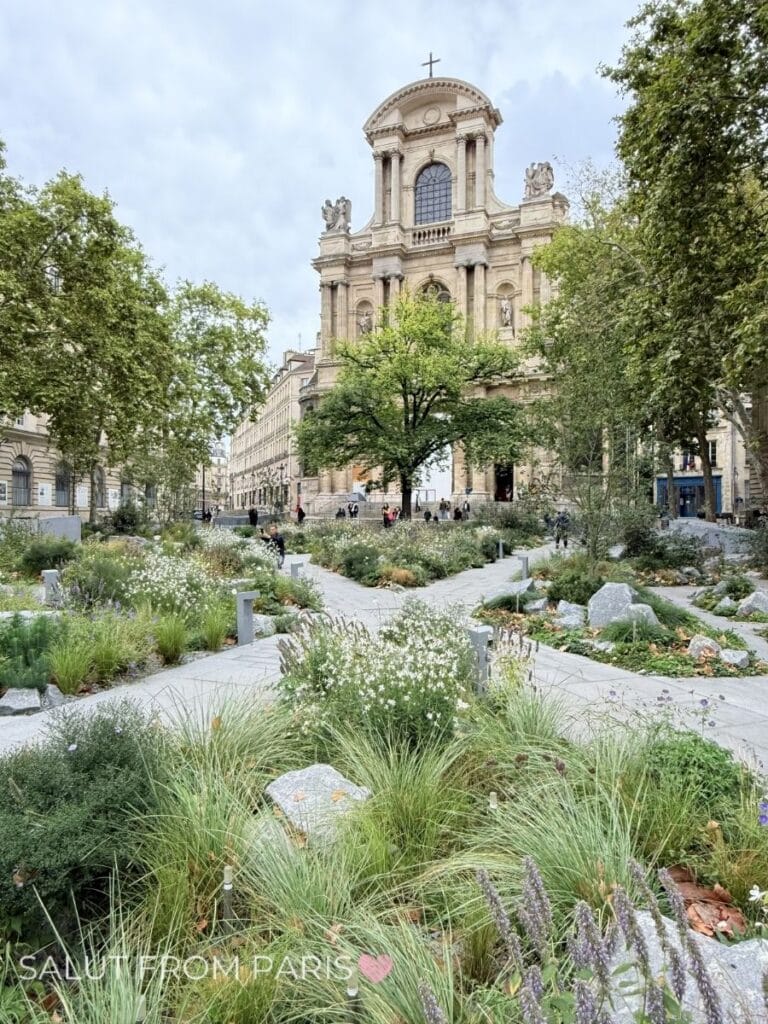
Located near Hôtel de Ville, the 13 Novembre 2015 Garden is one of the newest memorial spaces in Paris, dedicated to the victims of the terrorist attacks of 13 November 2015.
At first glance, it looks like a peaceful urban garden. But every element has meaning. The paths represent the streets where the attacks took place, while stone markers throughout the garden correspond to the different locations and bear the names of the victims who lost their lives that night.
What I particularly love about this memorial is how thoughtfully it was designed. During the evening, lights throughout the garden recreate the exact configuration of the stars above Paris on the night of 13 November 2015. It’s a subtle detail that many visitors might miss, but once you know its significance, it makes the space even more moving.
This isn’t a place you’ll spend hours exploring, nor is it intended as a tourist attraction. Instead, it’s a quiet place of remembrance that adds another layer to the story of Paris and the resilience of its people.
#16 Go Vintage Shopping

One of the reasons I keep coming back to the Marais is the shopping. If you’re looking for vintage and second-hand fashion in Paris, there is simply no better neighborhood.
You’ll find everything from kilo stores, where clothes are sold by weight, to curated boutiques specializing in designer pieces and luxury vintage fashion. Even if you’re not planning to buy anything, browsing the racks is part of the experience.
Personally, I love that every shop feels a little different. Some are treasure hunts where you need patience to find something special, while others feel more like carefully curated fashion galleries.
If you’re interested in kilo shopping, head towards Rue de la Verrerie. For a more curated selection of vintage and designer pieces, I usually recommend exploring Rue Réaumur and the surrounding streets.
#17 Marché des Enfants Rouges
Adress: 39 Rue de Bretagne, 75003 Paris

The Marché des Enfants Rouges in the northern Marais is Paris’s oldest covered market and a favorite for good reason. Open daily except Mondays, it’s more than just a market.
Despite its relatively small size, you’ll find food stalls serving everything from Moroccan tagines and fresh seafood to French crêpes and international specialties.
If you can’t find a seat, don’t worry. The surrounding streets are packed with excellent cafés and restaurants. And if you prefer takeaway, there’s a small park just across the street where you can enjoy your lunch.
Personally, I like coming here when I can’t decide what I want to eat. The variety is part of the appeal. One visit might end with a Moroccan lunch, the next with a crêpe or pastry. The market feels lively without being overwhelming, making it a great place to soak up the atmosphere of the Marais while taking a break from sightseeing.
Le Marais – Map and Self-Guided-Tour
To make exploring the Marais easy, I’ve put together a map with all the highlights and a self-guided walking tour. It’ll take you through the best spots, landmarks and museums.
Just follow the route at your own pace and see why this neighborhood is so special.
Crowd Alert: The Marais Can Get Busy
There is one thing you should know before visiting the Marais: you probably won’t be the only one with the idea.
The neighborhood is one of the most popular areas in Paris and can get very crowded, especially on weekends, sunny afternoons, and in the evenings when people head out for drinks and dinner.
Personally, I don’t mind the buzz for a while, but after a few hours it can feel a little overwhelming.
If you’re sensitive to crowds like I am, I recommend spending more time in the northern part of the Marais, in the 3rd arrondissement. The streets there tend to feel a bit calmer than around Rue de Rivoli, Hôtel de Ville, and Rue des Rosiers in the 4th arrondissement.
Luckily, the Marais is full of quiet corners if you know where to look. The Anne Frank Garden, the Jardin des Archives Nationales, the garden behind the Hôtel de Sens, and even the Saint-Paul-Saint-Louis Church are all excellent places to take a break from the crowds without leaving the neighborhood.
If crowded places tend to drain your energy, you might also enjoy my guide to experiencing Paris without the overwhelm, where I share my favorite strategies for enjoying the city while avoiding the busiest spots.

Wrapping Up: The Best of the Marais
The Marais is one of those rare Paris neighborhoods that rewards curiosity. Of course, you’ll find famous landmarks, excellent museums, and beautiful historic squares here. But some of my favorite moments in the Marais have come from stepping through an unassuming gate, wandering down a quiet side street, or stumbling across a hidden garden I wasn’t even looking for.
That’s what keeps me coming back. No matter how many times I visit, there’s always another courtyard, café, boutique, or hidden corner waiting to be discovered.
Whether you spend a few hours exploring or dedicate an entire day to the neighborhood, I hope this guide helps you experience both the famous highlights and some of the lesser-known places that make the Marais so special.
Grab the map, put on a comfortable pair of shoes, and allow yourself time to wander. The best discoveries often happen when you least expect them.
Want more Paris recommendations? Here’s my free Google Map with 200+ spots 🗺️
À bientôt,
Lena

Parisienne since 2006 🇫🇷
Sharing Paris life, French culture, cafés, food & honest travel tips
Join me on Facebook for updates and news about Paris.
NEW: The Salut from Paris Travel Guide:


Must-Haves for Paris:
- eSim card to stay online while in Paris. I used Airalo for my travels.
- You likely need a travel adapter to plug your devices.
- Travel Insurance – if you don’t have one, VisitorsCoverage is a good option.
- If your flight is delayed or even canceled, use AirHelp to get compensation.
Tours & Attractions:
- I book tours & activities through Get Your Guide or Viator.
- Museum & Landmark tickets can be cheaper on the official page, but they are often sold out.
- I love the GoCity Travel Passes for easy planning
Flights & Transportation:
- I use Omio to compare flight fares & connections
- Airport transfers I book through Welcome Pickup
- For car rentals, I use AutoEurope. It’s easy to compare prices
- Train Tickets, you can book through Omio
- Here’s my Parisian Metro Guide
Accomodation:
- Hotels in Europe I mostly book through Booking.com (check reviews carefully)
- Vacation Rentals through Airbnb or VRBO
FAQ Marais in Paris
Where is the Jewish quarter in Paris?
The Jewish Quarter of Paris is located in the Marais, primarily around Rue des Rosiers in the 4th arrondissement.
Known locally as Pletzl, it has been the heart of Jewish life in Paris since the Middle Ages.
Today, the area is famous for its Jewish bakeries, falafel shops, delicatessens, and historic landmarks such as the Memorial de la Shoah.
Which arrondissement is the Marais?
The Marais spans both the 3rd and 4th arrondissements of Paris, on the Right Bank of the Seine. While most visitors think of it as a single neighborhood, the southern section in the 4th arrondissement is generally busier and home to landmarks such as Hôtel de Ville and Rue des Rosiers, while the northern section in the 3rd arrondissement tends to feel a little quieter and more residential.
Where does the name Marais come from?
The name Marais means “swamp” or “marsh” in French. Before becoming one of Paris’s most fashionable neighborhoods, the area was largely marshland located outside the medieval city walls. Over the centuries it was drained and transformed into a district of aristocratic mansions, many of which can still be admired today.
Is the Marais worth visiting?
Absolutely. The Marais is one of the most interesting neighborhoods in Paris, combining centuries of history with excellent museums, beautiful architecture, hidden gardens, boutique shopping, and a vibrant food scene. Whether you’re interested in history, culture, shopping, or simply wandering charming streets, the Marais offers something for almost every type of traveler.
How much time do you need in the Marais?
I recommend setting aside at least half a day to explore the Marais properly. However, you could easily spend an entire day here visiting museums, browsing vintage shops, enjoying cafés, and discovering hidden courtyards and gardens. It’s one of those neighborhoods where the best experiences are often found while wandering without a strict plan.
What is the best day to visit the Marais?
Weekdays are generally the best time to visit if you’d like to avoid the largest crowds. Sundays are lively and many shops are open, but the area can become very busy. Keep in mind that some businesses in the Jewish Quarter close on Saturdays for the Sabbath.
Is the Marais expensive?
The Marais is one of Paris’s more upscale neighborhoods, but it can be enjoyed on almost any budget. Many of its best attractions, including the Musée Carnavalet and Maison Victor Hugo, are free to visit, while the neighborhood also offers everything from casual falafel shops to high-end restaurants and cocktail bars.